With the rapid iterative upgrading of new energy vehicles, intelligent driving, and vehicle electrification, high power density permanent magnet synchronous motors, as the core components of the drive system, have become the key core components that determine the power performance, driving safety, and durability of the entire vehicle. Selecting reliable and compliant automotive-grade automotive electric motor suppliers has a direct impact on the quality of the entire vehicle, the production delivery capability, and the market reputation of the OEM.
In the current market, the qualifications of automotive component suppliers vary greatly. Most original equipment manufacturers (OEMs) are unable to meet the standardized and comprehensive supplier evaluation standards. This will lead to problems such as inconsistent performance, delayed delivery, failure to meet vehicle-grade certification requirements, and insufficient R&D capabilities in mass-produced products, thereby restricting the mass production of vehicles and the upgrade of quality.
This text will comprehensively outline the standardized evaluation criteria for motor suppliers, providing direct and applicable selection and procurement guidelines for vehicle manufacturers and distributors.

1.The necessity of strictly selecting motor suppliers
1. Meeting the safety and quality compliance requirements of vehicle regulations
The core motors in automobiles are key safety components of the entire vehicle, and must comply with authoritative certification standards in the automotive industry such as IATF16949. System certification can effectively avoid potential hazards caused by poor motor quality.
2. Ensure stability of the mass production supply chain
Automobile manufacturers have large-scale production demands. High-quality suppliers need to have stable production capacity, standardized process management, and risk emergency mechanisms. This can effectively prevent major losses such as vehicle production halts and order delays caused by insufficient supply and delayed delivery.
3. Adapt to the long-term research and development, iteration and upgrading of the entire vehicle
The vehicle models of car manufacturers are continuously updated every year. High-quality motor suppliers can cooperate with the vehicle manufacturers to conduct simultaneous research and customization to optimize product performance, adapting to the technological upgrading needs of new energy and intelligent vehicles, and achieving long-term technical collaborative upgrading.
4. Achieve full life cycle cost control
A scientific supplier evaluation system can balance the upfront procurement costs with the subsequent maintenance, fault replacement, and after-sales operation costs, preventing the overall cost increase throughout the entire chain caused by using low-price and low-quality suppliers, and achieving the dual benefits of cost reduction and quality improvement.
2.Core assessment criteria
1. Compliance qualification certification
Compliance qualification is the hard entry standard for automotive OEMs to select core motor suppliers. It directly determines whether the products meet the compliance requirements for vehicle mass production. Qualified motor suppliers must possess IATF16949 automotive quality system certification, ISO9001 quality management certification, and a complete set of vehicle-grade product safety certifications. They must also have formal vehicle assembly qualification and mature cooperation projects with vehicle manufacturers. The OEMs need to conduct risk screening in advance to avoid suppliers with major quality accidents, supply contract breaches, or industry bad records, thus establishing a solid compliance foundation for the supply chain from the source.
2. Technical and Performance Verification
Technical strength and product performance are the core key indicators for evaluating motor suppliers, directly influencing the power performance, safety, and durability of the entire vehicle. High-quality suppliers must have an independent R&D team, stable R&D investment, and reserves of core patents for automotive motors to ensure continuous technological advancement. Production-grade automotive motors must have high power density, high energy efficiency, low noise, excellent heat dissipation, and long service life, and be able to stably adapt to extreme driving conditions such as high and low temperatures and complex road conditions. At the same time, suppliers must support customized parameters for specific vehicle models and synchronous R&D iterations to align with the update rhythm of the vehicle manufacturers' models.
3. Production Capacity and Quality Control System
A mature production scale and standardized quality control system are the core guarantees for the mass production of the main vehicle manufacturers. Reliable partner companies should be equipped with production lines and production areas, capable of stably handling large-scale orders. Relying on the full-chain quality inspection during the product's final factory inspection, it effectively ensures consistent performance of batch products and stable product qualification rates, significantly reduces quality fluctuations of mass-produced products, eliminates the common problem of inconsistent quality between samples and products in the industry, and continuously delivers stable and reliable automotive-grade motor products.
4. Supply Chain and Delivery Capacity
A stable supply chain and efficient delivery capabilities are the key operational supports that ensure the production rhythm of the vehicle manufacturers and avoid the risk of production halt. The high-efficiency EV motor suppliers for new energy vehicles have a stable raw material supply chain and regular inventory reserves. They can clearly define the standard delivery cycles for both regular and customized products, maintaining a high rate of on-time delivery. At the same time, they are equipped with emergency production capacity plans during peak seasons to effectively handle sudden situations such as surging orders and fluctuations in raw materials. Combined with professional auto parts protective packaging and a full-process traceability logistics system, they can maximize the guarantee of the integrity and on-time delivery of large quantities of goods, ensuring that the production progress of the vehicle manufacturers is not affected.
3.Comparison table by various supplier dimensions
| Evaluation Criteria | Qualified Vendor | Unqualified Vendor |
| Certifications & Qualifications | Possess complete IATF16949 automotive certifications and OEM supporting qualifications | Lack automotive certifications with incomplete qualifications |
| R&D Capability | Own professional R&D team, realize synchronous vehicle model iteration and support in-depth customization | No independent R&D capacity with poor product versatility |
| Batch Quality Consistency | Stable batch performance with adaptability to extreme working conditions | Low yield rate, unstable batch quality and frequent failures |
| Delivery & Supply Assurance | On-time delivery supported by inventory reserves and emergency supply plans | Disordered delivery schedule, frequent delays and incapability for mass production |
| Technical Support & After-Sales | Provide technical docking, commissioning and maintenance services | Slow after-sales response, absent technical support and unclosed-loop troubleshooting for failures |
XIAMEN WISE Electrical's On-Site Implementation
We have always strictly adhered to industry standards and established a complete set of operation systems. Our company has a mature and professional R&D team, multiple core invention patents, and also possesses a full range of authoritative certifications such as IATF16949, ISO9001, ISO14001, ISO45001, and CE.
We have carried out in-depth industry-university-research cooperation with many renowned universities and enterprises in China, jointly establishing high-tech laboratories such as electrical transmission and power supply. At the same time, we possess the capability for customized development and provide electric drive solutions. In the production end, we are equipped with a dust-free production plant, strictly controlling the precision of the production environment, and conducting 100% full-item factory tests to ensure that each batch of products has consistent performance, stable operation, and reliable durability.
With a complete qualification system, strong R&D capabilities and a production environment, we have established a full-chain R&D-production system. We have been providing long-term and stable services to several vehicle manufacturers and have fully met the assessment standards for standardized suppliers.
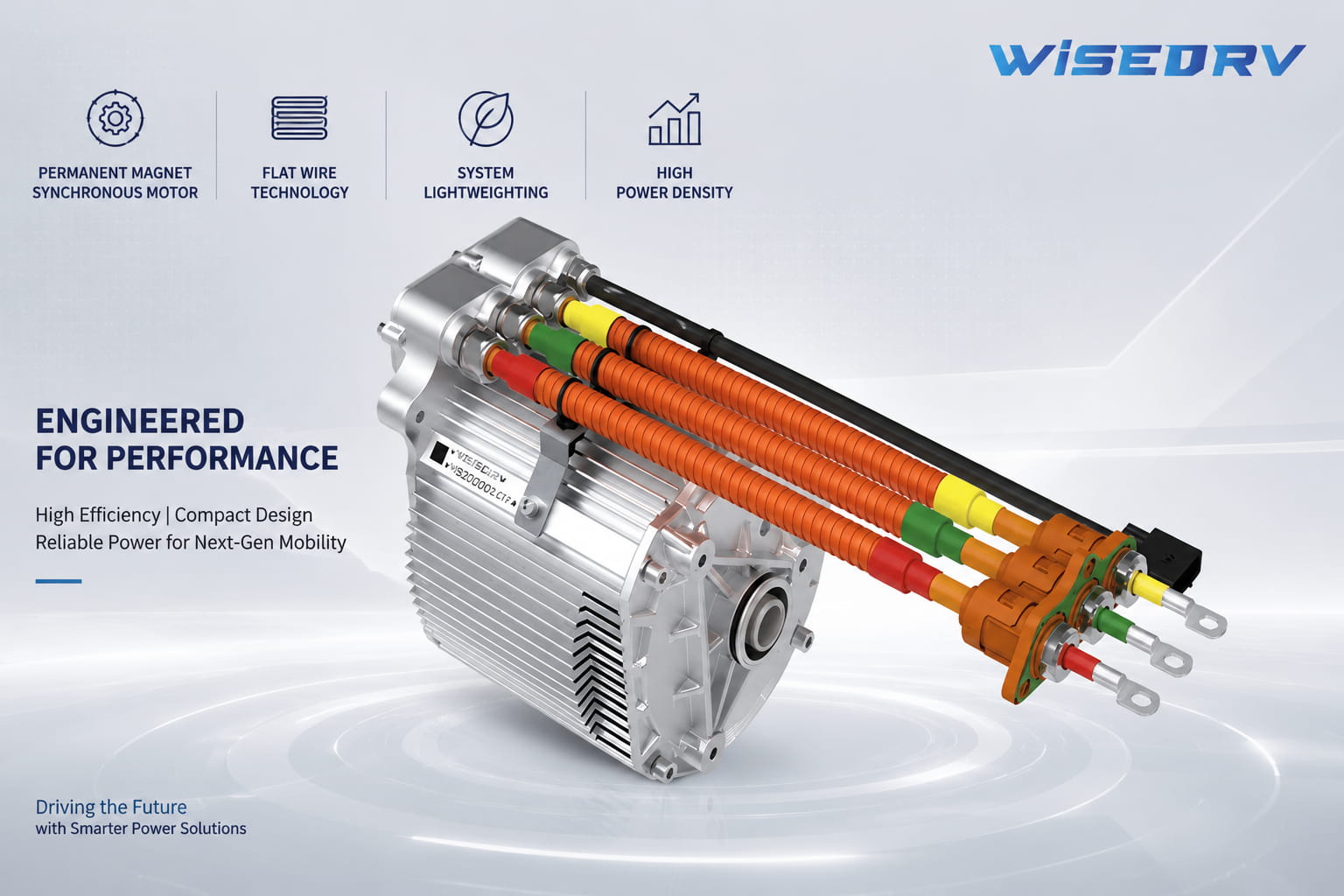
【If you want to have a clear understanding of the parameters and structural designs of our company's flat-wound permanent magnet synchronous motors or complete electric drive systems that comply with the procurement standards of vehicle manufacturers, you can visit the product center page to view the detailed information.】
4.Common selection mistakes and avoidance strategies
- Mistake 1: Focusing on low price while neglecting quality - Avoidance strategy: Establish a comprehensive cost-performance evaluation system, and prioritize ensuring compliance with the automotive-grade quality standards.
Myth 2: Sample quality does not match the quality of batch orders - Avoidance solution: Focus on verifying the quality rate of batch products to prevent the disconnection between sample quality and product quality.
5.Frequently Asked Questions (FAQ)
- Q1: What are the essential qualification certifications required for core motor suppliers of automotive original equipment manufacturers?
A: The IATF16949 automotive quality system certification is the core entry requirement. Additionally, they must possess formal automotive complete vehicle supporting qualifications and complete product testing reports.
Q2: What are the key evaluation indicators for an electric motor supplier by the vehicle manufacturer?
A: The core indicators are the quality stability of the product and the ability to supply in large quantities for mass production. The secondary indicators are the technical customization and adaptation capability, as well as the R&D design capability and after-sales maintenance technical capability.
Q3: How can one determine if a long-term cooperation can be established with the motor supplier?
A: A comprehensive assessment is required, including the manufacturer's technical research and development capabilities, the quality standards of batch orders, the efficiency of after-sales response, the capacity reserve capability, and the long-term service experience for vehicle manufacturers.
Q4: When a new car company selects its first motor supplier, what risks should it particularly avoid?
A: The key risks to be avoided include unqualified qualifications, inability to support large-scale orders, insufficient customization capabilities, and lack of after-sales technical support.
If you are analyzing the procurement logic of the entire electric drive solution and establishing a supplier qualification assessment system, you can refer to the article "Whole vehicle project selection: How to choose the appropriate supplier for electric vehicle motors and controllers". This article outlines a comprehensive and practical evaluation criteria for manufacturers and key points to avoid common pitfalls in selection.