For electric motorcycle manufacturers, the motor controller is the core of the power system that drives the vehicle and is the central hub for distributing electrical energy throughout the entire vehicle. It serves as a control bridge between the battery and the drive motor, receiving commands from the vehicle controller and the accelerator, and dynamically adjusting the motor current, torque, and speed. All the riding performance indicators, such as vehicle start-up response, high-speed stability, and climbing load performance, are determined by the controller. The selection of the controller scheme directly sets the performance limit of an electric motorcycle product.
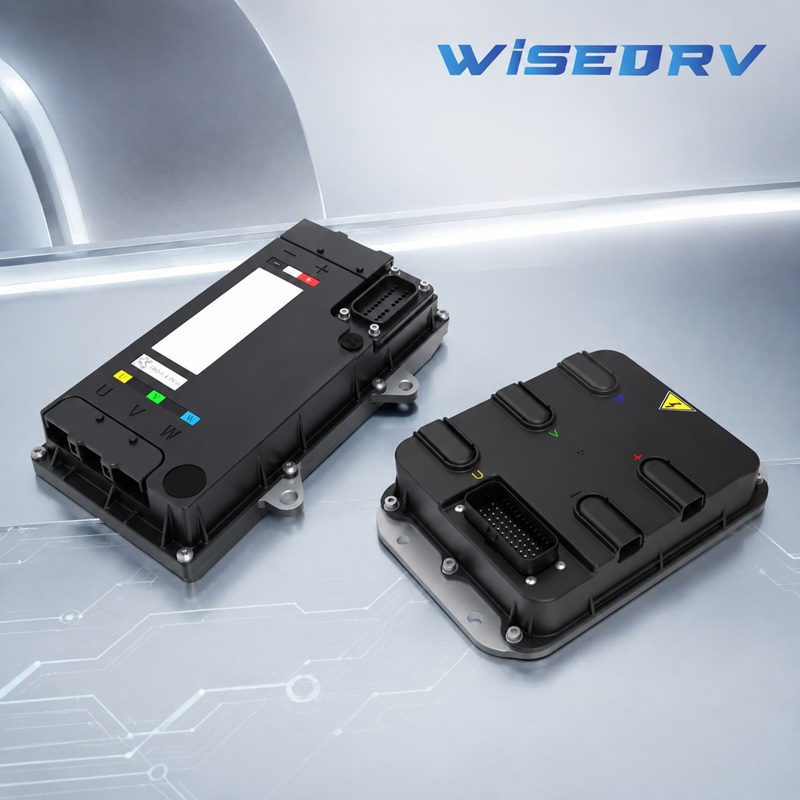
For high-speed electric motorcycles targeting a speed range of 100-120 miles per hour, a low internal resistance MOSFET brushless motor controller is a reliable solution. In conditions where continuous high-speed operation is required, the controller must be capable of stable output of large currents and possess excellent temperature control performance.

Mainstream Controller Types and Their Basic Characteristics
Currently, the controller solutions for the electric motorcycle market are diverse, with distinct hardware architectures and functional configurations, and are suitable for different positioning of vehicle projects. The mainstream solutions in the industry are mainly divided into three categories: basic brushless, high-voltage high-current high-performance, and intelligent. Each category has its own applicable scenarios and advantages and disadvantages.
1. The basic brushless controller without brushes is mainly used in low-speed commuting electric motorcycles. It operates stably in regular constant-speed scenarios. The technology is mature and the failure rate is low, making it suitable for manufacturers who prioritize high cost-effectiveness.
2. For high-performance high-speed electric motorcycles, high-performance brushless controllers with high voltage and large current are the best choice. Compared with ordinary general-purpose controllers, this type of controller can significantly reduce energy loss under heavy-load conditions, and this type of controller perfectly meets the power requirements of high-speed vehicles.
For this high-speed electric motorcycle category, we have developed two motor controllers to cover the diverse demands of high-speed models, providing OEMs with application-specific supporting solutions that fit their project requirements.
Our OTA & UDS supported high-current 72v controller product line covers the complete 48V~72V voltage platform, precisely matching the development requirements for electric motorcycles with a top speed of 100–120 km/h. Low internal resistance MOSFET modules are available as optional accessories, and the controllers are compatible with CAN2.0 communication as well as magnetic encoder signal input.
Compared with conventional controllers, these two models greatly reduce energy loss under harsh operating conditions. They are unlikely to trigger power derating due to overheating even after prolonged high-speed driving, and are currently supplied stably for mass-produced vehicle models.
3. The intelligent programmable controller is a preferred solution for mid-to-high-end vehicles. Besides basic power control, it also has the expansion capabilities such as integrated Bluetooth debugging and standardized diagnostic protocols. These two controllers from Xiamen Wise not only meet the above high-performance standards but also incorporate support for bluetooth-enabled high-speed motorcycle electrical systems, enabling real-time parameter calibration of the entire vehicle and unified fault diagnosis, fully meeting the differentiated model calibration needs of brand manufacturers.
How the Controller Affects Several Core Performance Parameters of E-Bikes
As the central control hub for the vehicle's power, the controller has a significant impact on power release, energy distribution, and compatibility with operating conditions. Through concerted efforts in these dimensions, the actual riding performance of the vehicle is redefined. Below, from five core dimensions, we will specifically elaborate on the underlying influence logic of the controller on the overall performance of e-bikes.
- Starting acceleration and peak torque
The maximum phase current that the controller allows to output determines the upper limit of the vehicle's instantaneous torque. If the controller has sufficient peak current margin, the vehicle can start smoothly and accelerate rapidly; otherwise, even if the vehicle is equipped with a high-power motor, a conservative current-limiting controller will cause acceleration delays, which will have a significant impact on the riding experience of the end users and is not conducive to the product's market competitiveness.
- Continuous high-speed stability
The controller limits the maximum operating speed of the motor. To achieve continuous high-speed driving at 100-120 feet, a 72V high-voltage controller is the mainstream solution. The low-resistance hardware design effectively suppresses temperature rise, ensuring that the vehicle can maintain its top speed stably and avoiding overheating protection and power drop after a period of high-speed driving, addressing the most common pain points of high-speed vehicles.
- Cliff climbing and heavy-load adaptability
When the vehicle climbs a slope or travels with a full load, the motor requires a large amount of current to support it. This significantly increases the load pressure on the entire vehicle. Ordinary controllers are insufficient in specification and are prone to frequently triggering overcurrent protection. High-specification high-current controllers can maintain stable power output in heavy-load conditions, ensuring the adaptability of the vehicle to complex road conditions and expanding the applicable scenarios of the product.
- Vehicle energy consumption and range performance
The heat loss during the energy conversion process of the controller will directly consume battery power. A controller equipped with low-resistance MOSFETs can reduce heat loss. Under the condition that the motor and battery configuration remain unchanged, optimizing the vehicle's range can help manufacturers optimize the range of their models and enhance the core competitiveness of the vehicles.
- Riding quality and power linearity
The quality of the riding experience actually hinges on the algorithm of the controller. A high-quality controller provides a smooth and linear power output; while ordinary controllers often have problems such as power fluctuation and delayed throttle response, which can affect the overall quality and brand reputation of the vehicle.
If one wants to select the appropriate controller based on project requirements
When selecting the prototype for the entire vehicle, it is necessary to align with the product positioning and performance indicators, and prioritize matching the corresponding voltage platform.
- The 48V controller solution is more suitable for lightweight and low-speed electric two-wheelers for daily commuting purposes, meeting the basic usage needs. The 60V and 72V solutions are specifically designed for 100-120 mph high-speed electric motorcycles, catering to the power output standards of high-performance vehicles. During the selection process, it is necessary to strictly avoid mismatches in the matching of high and low voltage power components, and address the risk issues from the source.
- The actual usage scenarios of the vehicle model are the core basis for determining the current specifications of the controller. Selecting components as needed can balance performance and cost. For regular commuting and smooth road conditions, electric two-wheelers can choose our 48V-96V 300A Brushless Motor Controller, which can balance power and cost; for high-performance models intended for mountainous terrains, continuous high-speed cruising, and heavy-load starting, sufficient current margin needs to be reserved, and the 48V-72V E-Drive Platform with a mature cooling solution can be selected to ensure stable operation under long-term high-load conditions.
- Automakers also need to consider the long-term operational capabilities of the products in combination with the project positioning and production planning. Match different production capabilities with research and development projects: For small-batch customized projects, the local parameter debugging function of Bluetooth can effectively shorten the calibration cycle; while for large-scale mass production vehicle projects, controllers that support the UDS diagnostic protocol can achieve rapid fault diagnosis for batch vehicles, reducing the pressure of after-sales maintenance.
From the perspective of the entire vehicle's lifecycle operation, intelligent controllers with remote update capabilities are the core means for automakers to reduce costs, increase efficiency, and continuously optimize products. The traditional controller update algorithms and parameter adjustments require offline wiring and on-site debugging, which involves a complex process. Controllers with intelligent functions support remote control strategies, eliminating the need for numerous cumbersome procedures, and enabling timely upgrades to the vehicle's safety system.
Based on the above selection criteria, for the 100-120 cm³ high-speed electric motorcycle market, we have launched two motor controllers on the 48V-72V platform, covering different power levels for complete vehicle solutions. The detailed product parameters are as follows:
| No. | Item | Product 1 | Product 2 | Remarks |
|---|---|---|---|---|
| 1 | Product Type | Motor Controller | Motor Controller | / |
| 2 | Compatible Sensor Type | Magnetic Encoder | Magnetic Encoder | Encoder power supply: 5V–12V |
| 3 | Operating Voltage Range | 35–85 Vdc | 35–85 Vdc | / |
| 4 | Rated Voltage | 48/60/72 Vdc | 48/60/72 Vdc | / |
| 5 | Rated / Peak Phase Current | 160A / 350A | 180A / 450A | / |
| 6 | Bus Current | 150A | 150A / 200A | / |
| 7 | Communication Protocol | One-line Communication / CAN2.0 | One-line Communication / CAN2.0 | / |
| 8 | Cooling Method | Natural Air Cooling | Natural Air Cooling | Recommended to be installed at the vehicle windward area |
| 9 | Optional Functions | Low Internal Resistance MOSFET, Bluetooth, UDS, OTA | Available on request | / |
| 10 | Applicable Vehicle Models | 100–120 km/h High-performance Electric Motorcycle | 100–120 km/h High-performance Electric Motorcycle |
/ |
FAQ: Common Questions Regarding the Selection and Use of Electric Motorcycle Controllers
Q1: Is it better for the controller's current specification to be larger? How should the selection be made reasonably?
It is not necessarily the larger the better. The current specification of the controller needs to be selected based on the actual usage scenarios of the vehicle. For vehicles used for regular commuting and on smooth roads, an intermediate current specification controller can be selected; for high-performance vehicles such as those used for mountainous terrains, continuous high-speed cruising, or heavy-load starting, sufficient current margin should be reserved and a large current controller with mature heat dissipation should be used to avoid triggering overcurrent protection under high-load conditions, ensuring operational stability.
Q2: What practical value does a controller with OTA function have for car manufacturers?
The core value lies in cost reduction and efficiency improvement as well as continuous product optimization. Traditional controllers need offline disassembly and debugging to optimize parameters and update algorithms, which is a cumbersome process with high售后 costs; controllers with OTA function can remotely iterate control strategies, eliminating the need for vehicle recalls and enhancing the market competitiveness of the vehicle model.
Q3: What are the core differences between the basic brushless controller and the high-performance controller?
The core differences lie in load capacity, heat dissipation performance and scalability. The basic controller is suitable for low-speed commuting and stable uniform-speed operation, but under high-load and long-term high-speed conditions, it has high heat loss, prone to power attenuation, and lacks standardized communication interfaces, resulting in poor scalability; the high-performance high-voltage high-current controller has low overload loss and excellent heat dissipation, supports CAN2.0, UDS diagnostic functions, and is suitable for high-speed and heavy-load scenarios, capable of meeting both mass production and customized requirements.
Q4: If the controller is improperly selected, what impacts will it have on the entire electric motorcycle?
It will directly lower the overall performance of the vehicle. It may cause a series of problems, significantly reducing the user's riding experience, even leading to hardware damage. At the same time, it will increase the cost of after-sales maintenance and weaken the market competitiveness of the model.
Contact Us for Controller Specification & Quotation
If you are a manufacturer of high-speed electric motorcycles and are developing models with a speed range of 100-120 miles per hour, or if you are looking for high-performance motor controllers suitable for electric motorcycles, please feel free to contact our technical and business teams.
Our two 48V to 72V platform controllers have completed the production testing. We can customize solutions according to your vehicle model requirements.
Click on "Motor Controller for 100-120km/h Electric Motorcycles" to learn more about the project details, and obtain the exclusive technical solution and bulk quotations.